How to Find Reliable Tree Surgery Near Me for Your Property
Trees can add considerable character, shade, privacy, and environmental value to a property, but maintaining them properly requires knowledge and careful planning. Whether a tree needs pruning, crown management, attention following storm damage, or assessment because of declining health, choosing the right professional can make an important difference to both the tree and its surroundings.
When looking for tree surgery near me, it can be tempting to select the first provider available or make a decision based entirely on price. Tree work, however, can involve considerable complexity. Tree size, species, condition, location, surrounding buildings, access restrictions, and the type of work required can all influence how a project should be approached. A reliable professional should consider these factors before recommending a suitable course of action.
Property owners can make a more informed choice by considering practical experience, communication, working methods, quotations, and the way a provider approaches the long-term condition of trees. Understanding these areas can make it easier to distinguish professional care from a service that simply focuses on completing the work as quickly as possible.
Check Experience, Knowledge, and Professional Working Practices
Tree care covers a wide range of tasks, and different situations require different levels of expertise. Routine pruning of a small garden tree is very different from reducing a mature canopy above a building or dealing with a structurally weakened tree beside a public footpath. Before arranging work, property owners should therefore consider whether the professional has suitable experience for the particular task.
A knowledgeable arborist should understand tree biology as well as practical cutting techniques. Removing branches without considering how the tree will respond can affect future growth, structural balance, and overall condition. A professional assessment should consider why work is necessary and how much intervention is appropriate rather than assuming that extensive cutting is always the answer.
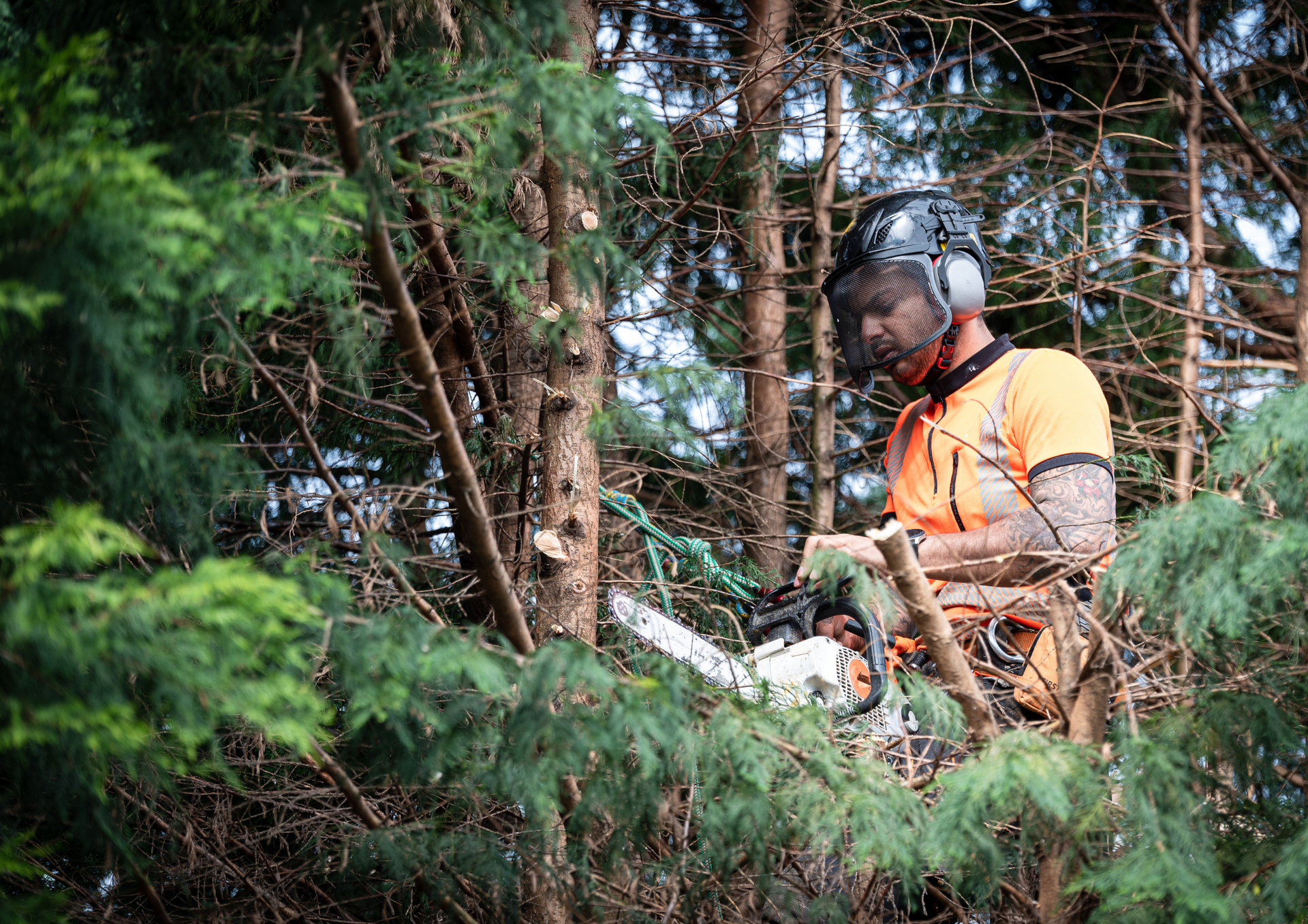
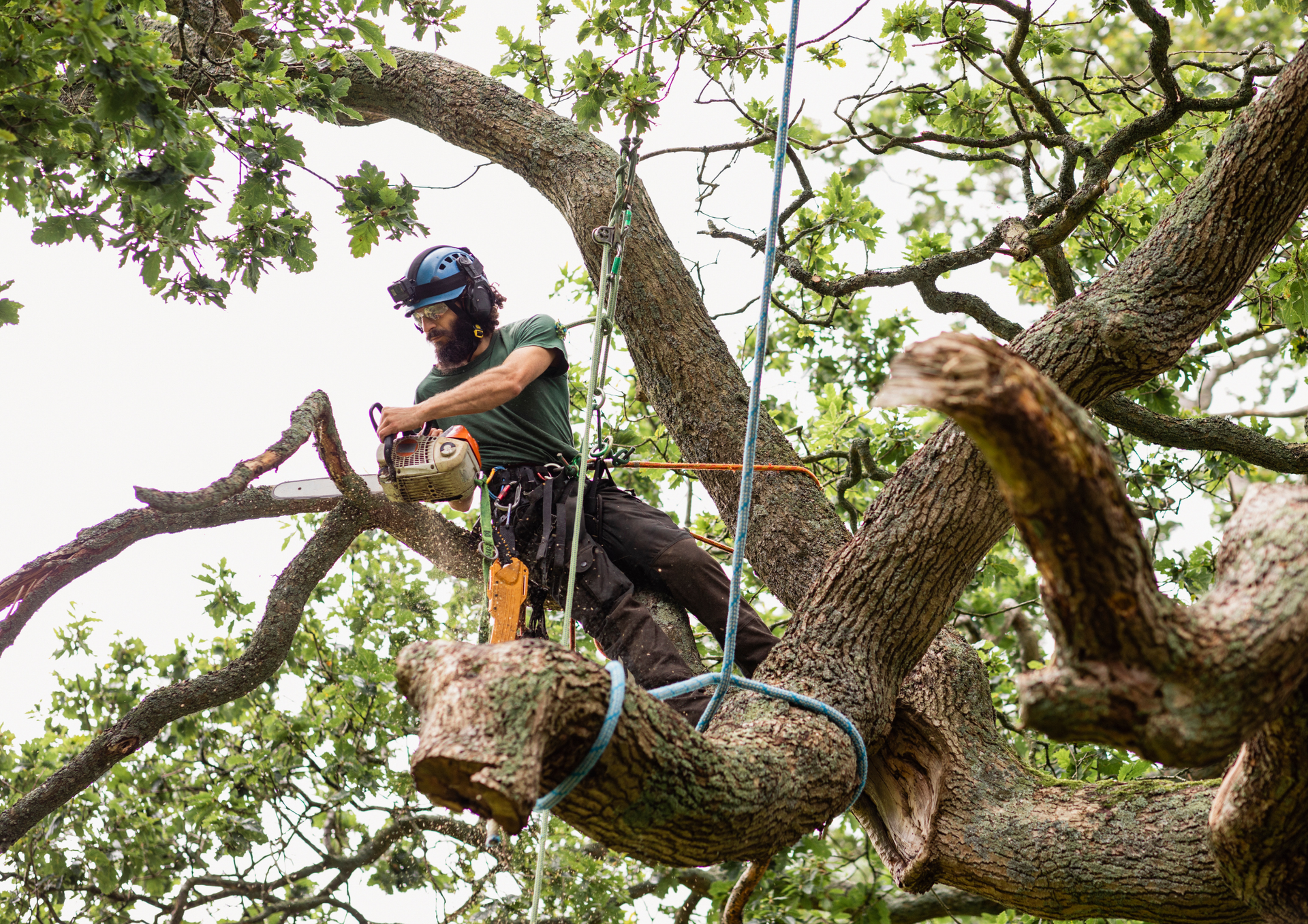
When searching for a tree surgeon near me, look beyond attractive photographs or a convenient appointment time. Useful signs of a professional approach include a willingness to inspect the tree properly, explain the proposed work, discuss potential limitations, and answer reasonable questions before anything begins.
Important points to consider include:
- Relevant experience: Ask whether the professional regularly handles trees of a similar size, species, condition, or location.
- Tree knowledge: A competent arborist should be able to explain how the proposed work may affect future growth and structural development.
- Risk assessment: Work involving large branches, climbing, restricted spaces, or nearby buildings requires careful evaluation before cutting starts.
- Appropriate equipment: The equipment required will depend on the tree, access, height, and complexity of the project.
- Site awareness: Professionals should consider buildings, vehicles, boundaries, pathways, neighbouring land, and other features around the working area.
- Wildlife considerations: Trees and hedges may provide habitat for birds and other wildlife, so appropriate checks can form an important part of responsible planning.
- Waste management: Clarify whether branches, logs, and other material will be removed or left at the property as agreed.
- Clear recommendations: The suggested work should have a practical reason rather than simply involving unnecessary cutting.
Qualifications and training can provide additional reassurance, but experience and professional judgement are equally important. Tree care frequently requires decisions to be made according to the individual tree rather than a standard formula.
Property owners should also be cautious when extensive work is recommended without a meaningful inspection. While some problems are obvious, others require closer examination. A tree may look unhealthy because of seasonal changes, previous pruning, soil conditions, or localised damage rather than because it needs to be removed.
A reliable professional should be comfortable discussing alternatives. For example, selective pruning might resolve an issue that initially appears to require major crown reduction, while monitoring may sometimes be more appropriate than immediate intervention. Conversely, significant structural weakness may mean that retaining a tree is not sensible. The purpose of professional assessment is to distinguish between these situations.
Compare Communication, Assessments, and Written Quotations
Good communication is one of the clearest indicators of a dependable service. Property owners should understand what is being recommended, why it is necessary, how the work will be carried out, and what the site is likely to look like afterwards.
An initial conversation can reveal a great deal about a provider's approach. Professionals should be prepared to listen to the property owner's concerns rather than immediately deciding what work should take place. Someone may be concerned about excessive shading, branches touching a roof, a tree leaning towards a boundary, or growth obstructing a driveway. Each concern requires an appropriate assessment rather than an identical solution.
People searching for tree surgeons in my area may find numerous providers offering similar descriptions of their work. Comparing how clearly each one communicates can therefore be useful. A detailed explanation of the proposed work generally provides more confidence than a vague promise to "cut the tree back" without defining what that involves.
Written quotations are particularly valuable for larger projects. A quotation should make it reasonably clear what work is included so that different proposals can be compared fairly. One provider may include waste clearance and stump treatment while another may quote only for the initial cutting, creating an apparent price difference that does not reflect the complete scope of work.
Property owners should consider asking whether the quotation covers:
- the specific trees included in the work
- the type and extent of pruning or other treatment
- disposal or retention of branches and timber
- access arrangements
- specialist equipment where necessary
- treatment of the remaining stump where applicable
- expected site clearance
- any relevant limitations identified during inspection.
Clarity before work begins can prevent misunderstandings later.
Communication is equally important when circumstances change. Tree work can occasionally reveal decay, cavities, damaged unions, or other conditions that were difficult to identify from ground level. If the original plan needs to change, the reasons should be explained before additional work proceeds whenever circumstances allow.
Reviews can provide useful supporting information when comparing professionals, particularly comments relating to punctuality, communication, tidiness, and whether the completed work matched what had been discussed. However, ratings should not replace an assessment of practical competence. A large number of positive reviews does not automatically demonstrate that someone is suitable for technically demanding work.
The quality of the initial assessment should therefore remain central to the decision. A professional who asks questions, examines the tree carefully, considers its surroundings, and explains realistic options is providing useful information that allows the property owner to make an informed choice.
Consider Local Knowledge, Availability, and the Needs of Your Property
Every property presents different tree management challenges. A detached home with a large garden may offer straightforward access, while a terraced property could require equipment and branches to be moved through narrow side passages. Commercial premises, rented properties, shared gardens, and sites beside public roads may introduce additional practical considerations.
Searching for local tree surgeons near me can be helpful because professionals familiar with an area may understand common tree species, typical property layouts, local ground conditions, and practical access challenges. Local knowledge should not replace professional competence, but it can support efficient planning and realistic recommendations.
When assessing suitability, consider:
- Property access: Narrow entrances, gates, walls, neighbouring buildings, or parked vehicles may affect how equipment reaches the tree.
- Tree position: Trees close to houses, garages, conservatories, fences, roads, or utility infrastructure require additional care.
- Tree maturity: Large established trees often need more detailed planning than young specimens.
- Previous work: Historic pruning can influence branch structure and determine what future maintenance is appropriate.
- Ground conditions: Compacted, waterlogged, disturbed, or exposed soil can influence tree stability and root health.
- Canopy condition: Deadwood, crossing branches, uneven growth, or excessive weight may require targeted attention.
- Long-term objectives: Consider whether the priority is retaining the tree, controlling its size, improving clearance, managing risk, or preparing the area for future landscaping.
- Future maintenance: Some trees benefit from periodic monitoring rather than waiting for significant problems to develop.
Availability is another consideration, but the quickest appointment is not automatically the best option. Unless a tree presents an immediate hazard, allowing enough time for a proper assessment and planned work can lead to better results.
Seasonality can also influence tree maintenance. Certain work may be more appropriate at particular points in the year depending on the species, condition, objectives, and wildlife considerations. A professional should be able to advise whether work should proceed immediately or whether waiting would provide a better outcome.
Property owners should also think beyond the individual job. Trees are living features that change continuously, and work completed today can influence their structure for years. Excessive pruning may stimulate weak or dense regrowth, while carefully selected cuts can maintain a more balanced framework.
This long-term perspective is particularly important with mature trees. A large specimen may have taken decades to develop and can make a significant contribution to the character of a property. Where safe and practical, thoughtful management can often retain these benefits while addressing specific concerns.
Young trees also deserve careful attention. Early formative pruning can help establish better structure and may reduce the need for extensive intervention later. Professional guidance can therefore be useful at many stages of a tree's life rather than only when a serious problem appears.
Understand Pricing Without Choosing on Cost Alone
Price understandably influences the choice of professional tree care, but quotations should be assessed alongside the complexity and scope of the work. Two apparently similar trees may require very different approaches because of their location, condition, height, access, or proximity to structures.
People researching tree surgeon near me prices should remember that a figure without context provides limited information. The amount charged may reflect the number of professionals required, the time involved, access difficulties, specialist equipment, the quantity of material being removed, and the technical demands of completing the work safely.
A lower quotation is not automatically poor value, just as a higher one does not automatically indicate better workmanship. What matters is understanding what is included and whether the proposed approach is appropriate.
For example, a straightforward pruning job on an accessible tree may require relatively limited preparation. When comparing options for tree surgery near me, look for a professional who takes time to understand the property and assess the individual tree before recommending work.
Property owners can obtain better value by requesting clear quotations and considering the long-term consequences of the work. Poorly planned pruning may require corrective maintenance later, while unnecessary removal can permanently change the appearance and environmental value of a property.
It is also worth considering whether ongoing maintenance could reduce future expenditure. Periodic inspections may identify developing deadwood, structural imbalance, or branches beginning to conflict with buildings before extensive intervention becomes necessary. Smaller, planned tasks can sometimes be easier to manage than waiting until a tree becomes severely overgrown or unstable.
For this reason, selecting professional care should be viewed as a balance between cost, competence, safety, communication, and the quality of the proposed solution. The cheapest initial quotation may not provide the best long-term outcome, while sensible maintenance does not necessarily require the most expensive option.
Tree Surgeon Preston provides professional tree care for property owners throughout Preston and surrounding areas, with an approach centred on careful assessment, straightforward communication, and practical recommendations. We consider the condition of each tree alongside its location, surroundings, and the objectives of the property owner before determining an appropriate course of action.
For those searching for tree surgery near me, we provide support for everything from routine pruning and trimming to the more complex management of mature or problematic trees. Our focus is on responsible working practices and solutions suited to the individual site, with clear explanations to help property owners understand what their trees require.
By taking a measured approach rather than recommending unnecessary intervention, we aim to support safer, healthier, and more manageable outdoor spaces. Our goal is to provide dependable professional care that helps property owners make informed decisions about immediate requirements and the longer-term management of their trees.
Check out our latest X update on how to find reliable
tree surgery near me for professional and dependable property care.
Add your paragraph title here
This is the text area for this paragraph. To change the text, simply click here and start editing.
You might also like